
Introduction To Digital Learning Tools
The landscape of education has seen a massive transformation over the last decade. The traditional classroom setup with chalkboards and paper notes is rapidly being replaced by digital and interactive learning environments. Among the various technologies contributing to this change, the smartboard stands out as one of the most impactful tools. It brings together the features of a whiteboard, computer, and projector, enabling educators and students to engage in a more interactive and collaborative way.
What Makes A Smartboard Unique
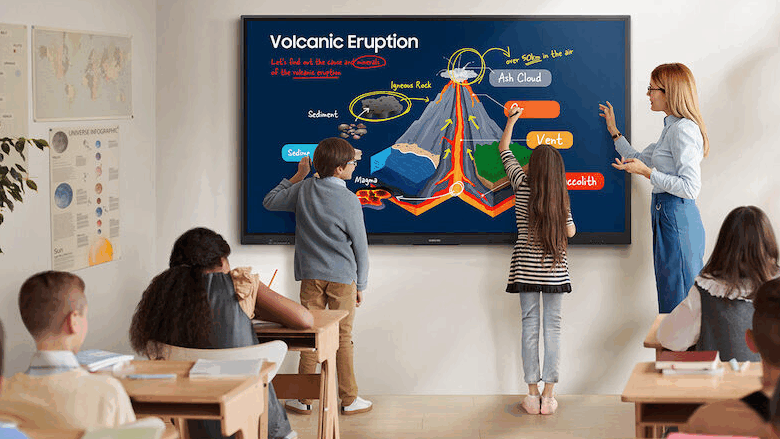
A smartboard is not just a digital screen. It is an intelligent device that allows users to write, draw, drag, and interact with content using touch gestures or digital pens. Connected to a computer or the internet, it can project multimedia content such as videos, presentations, and animations. Its ability to save lessons, replay sessions, and allow real-time participation makes it far superior to traditional boards.
Role In Enhancing Student Learning
The use of a smartboard promotes active learning. It makes complex subjects easier by using visual and audio resources. Whether it is a science experiment, a mathematical explanation, or a historical timeline, everything becomes clearer when shown through interactive content. Students stay more focused and retain knowledge longer when they learn through visual tools rather than listening to plain lectures.
Versatile Application Across Subjects
One of the biggest strengths of a smartboard is its adaptability across all subjects. In language classes, it can be used to play pronunciation videos and interactive grammar games. In science, teachers can display 3D models of the human body or a solar system. Mathematics becomes easier with visual formulas and geometry drawing tools. Even art classes benefit from digital sketching features.
Real-Time Collaboration And Feedback
With a smartboard, students and teachers can interact in real-time. Multiple users can touch and use the board at the same time, making it ideal for group work or classroom discussions. Teachers can give instant feedback on assignments displayed on the board, and students can participate directly by solving problems or presenting ideas using the board. This active engagement builds confidence and improves communication.
Support For Special Education Needs
Inclusive education is a growing focus in today’s learning environments. The smartboard offers features that support students with special needs. Text-to-speech, screen magnification, and high-contrast display settings are helpful for visually or hearing-impaired students. Interactive learning also helps students with attention disorders by maintaining their interest for longer periods.
See also: Transforming Education with Digital Solutions
Easy Integration With Online Platforms
The smartboard integrates smoothly with digital learning platforms. Teachers can access their Google Classroom or Microsoft Teams accounts directly on the board. Assignments, quizzes, presentations, and student attendance can all be managed without switching devices. This reduces classroom downtime and makes lesson delivery more efficient.
Time Saving For Teachers
Lesson planning becomes easier with a smartboard. Teachers can prepare content in advance, store it digitally, and reuse it for multiple sessions. No need to rewrite notes or redraw diagrams daily. Everything can be saved, edited, and presented within seconds. Many smartboards also offer templates and lesson resources that further reduce preparation time.
Boosts Technological Skills
Introducing smartboards in classrooms familiarizes students with the latest technology. It encourages them to explore digital tools, navigate software interfaces, and build confidence in using interactive systems. These technological skills are essential for higher education and professional life. Early exposure prepares students for a digital future.
Corporate And Professional Training Uses
The smartboard is not limited to schools. Many corporate training rooms and workshops also use this tool. It allows teams to brainstorm ideas, annotate reports, share files, and present business strategies in meetings. Instructors in professional courses also use smartboards to explain technical subjects through visuals and animations, making sessions more effective.
Environmental And Economic Benefits
Switching to a smartboard reduces the use of paper, markers, and printing resources. It promotes an environmentally friendly approach to education. Over time, it also becomes cost-effective since lesson materials can be reused, and digital notes can replace printed handouts. Institutions investing in this technology often save on recurring classroom material costs.
Challenges In Adoption
Despite its advantages, some challenges remain in adopting smartboards. These include:
- Initial Cost: Buying and installing a smartboard system requires a good budget.
- Training Requirements: Teachers and students need basic training to use the system effectively.
- Maintenance Issues: Regular updates, software compatibility, and technical support are necessary to keep the system running smoothly.
- Access Disparities: In underfunded or rural schools, the cost and infrastructure required for such tools may not be available.
However, with increasing awareness and government support for digital education, these challenges are being addressed gradually.
Future Possibilities With Smartboards
The future of the smartboard is promising. With advancements in artificial intelligence, smartboards are expected to become even more intuitive. Features like voice recognition, gesture control, and AI-powered lesson recommendations could soon become standard. Integration with virtual and augmented reality can also take classroom experiences to an entirely new level.
Conclusion
The smartboard is more than just a piece of technology; it is a learning enabler that bridges the gap between traditional and modern education. It has already made a significant difference in how lessons are delivered and how students participate in learning. As we continue to embrace digital tools in classrooms, the smartboard will remain central to creating a more interactive, inclusive, and innovative educational experience.
Schools, colleges, training centers, and businesses that adopt this technology not only improve their teaching efficiency but also prepare their learners for a future where digital skills are key. As accessibility improves and more resources become available, the use of smartboards is likely to become a norm rather than an exception in education around the world.


