
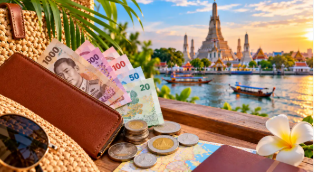
Traveling to Thailand can be an exciting experience, whether you are visiting its beautiful beaches, exploring local markets, enjoying the nightlife or staying for an extended period. However, managing money is an important part of planning a comfortable trip. Understanding how foreign currency exchange works can help travelers avoid unnecessary fees and get better value when converting their money into Thai baht.
Thailand welcomes visitors from around the world, including the United States, Europe and Russia. As a result, currencies such as the US dollar (USD), euro (EUR), and Russian ruble (RUB) are commonly exchanged in major tourist destinations, particularly Phuket, Bangkok, Pattaya and Chiang Mai.
Understanding the Thai Baht and Exchange Rates
The official currency of Thailand is the Thai baht (THB), represented by the symbol ฿. It is used for everyday transactions, including accommodation, transportation, shopping, restaurants and entertainment.
Exchange rates determine how much Thai baht you receive when converting your home currency. These rates fluctuate depending on international currency markets, economic conditions, inflation, interest rates and other financial developments.
For example, someone exchanging US dollars will receive a different amount of baht depending on the exchange rate available on that particular day. The same applies to euros and Russian rubles.
It is important to remember that the international market rate and the rate offered by a local exchange provider are not always identical. Money changers include a margin in their buying and selling rates, which affects the final amount customers receive.
Why Phuket Is an Important Currency Exchange Destination
Phuket is one of Thailand’s most popular international tourist destinations. Millions of visitors travel to the island to enjoy its beaches, resorts, restaurants, shopping areas and cultural attractions.
Because Phuket attracts travelers from different countries, foreign currency exchange services are widely available. Visitors can find exchange counters in popular areas such as Patong, Kata, Karon, Phuket Town and Bang Tao.
Having access to reliable exchange services makes it easier for international visitors to manage their travel expenses. Instead of carrying large amounts of Thai baht from their home countries, travelers can bring an internationally recognized currency and exchange it after arriving in Thailand.
However, choosing the right exchange provider is important. Comparing rates between different licensed exchange offices can help customers receive more baht for the same amount of foreign currency.
Exchanging US Dollars for Thai Baht
The US dollar is among the most widely accepted foreign currencies at exchange counters throughout Thailand. Many licensed money changers regularly handle USD transactions, making it a convenient option for American tourists and international travelers.
One important consideration is the condition and denomination of banknotes. Exchange offices may offer different rates depending on whether customers bring $1, $20, $50 or $100 bills.
Larger, clean, undamaged banknotes often receive more favorable rates. Torn, heavily marked or damaged notes may be rejected or exchanged at a lower rate.
Travelers should also check the latest USD-to-THB rate before visiting an exchange counter. Comparing the advertised rate with the final amount offered helps prevent unexpected differences.
Exchanging Euros in Thailand
The euro is another popular currency among international visitors, particularly those traveling from Germany, France, Italy, Spain and other European countries.
Most established currency exchange providers in major Thai tourist destinations handle EUR transactions. Phuket is especially convenient for European travelers because exchange services are available in several busy tourist neighborhoods.
Before exchanging euros, visitors should compare the buying rates offered by different providers. Even small differences can become significant when exchanging larger amounts.
It is also advisable to carry clean banknotes and check whether the exchange office accepts the denominations available. Keeping the exchange receipt can be useful for personal financial records and future reference.
Russian Ruble Exchange and International Transfers
Russian visitors and residents may have different currency exchange requirements, particularly when managing money during extended stays in Thailand.
Although some exchange offices in Phuket accept Russian rubles, availability and rates can vary considerably between providers. The ruble may also have a wider exchange-rate margin than major international currencies such as USD and EUR.
For this reason, travelers should confirm whether an exchange counter accepts RUB before visiting. They should also compare the final amount offered rather than relying entirely on an online reference rate.
International money transfers provide another option for people who need to move funds between countries. Depending on availability, customers may use authorized transfer providers, supported banking services or other regulated financial channels.
Before sending money, check the transfer fees, conversion rate, processing time, receiving method and any applicable restrictions. Always use legitimate providers and verify the recipient’s details before confirming a transaction.
How to Find the Best Currency Exchange in Thailand
Finding a competitive exchange rate does not necessarily mean choosing the first exchange office you see. A little research can make a noticeable difference, particularly when converting larger amounts.
When searching for the Best currency exchange in Thailand for USD, EUR and RUB, consider the following factors:
1. Compare Multiple Exchange Rates
Check the buying rates displayed by several licensed exchange providers. Remember that the buying rate is the amount a provider offers when purchasing your foreign currency in exchange for Thai baht.
2. Check the Final Amount
Do not focus only on advertisements claiming zero commission. Ask how many baht you will receive after all applicable charges. This provides a clearer picture of the actual transaction cost.
3. Choose Licensed Providers
Use authorized banks and licensed money changers. A legitimate provider should display the required licensing information and exchange rates.
4. Check Banknote Conditions
Make sure your foreign banknotes are clean, genuine and undamaged. Some exchange offices apply different rates depending on the currency denomination and condition.
5. Keep Your Transaction Receipt
Always request a receipt after exchanging money. It provides a record of the transaction and can help resolve questions if an issue arises.
Currency Exchange Counters, Banks and ATMs
Travelers in Thailand generally have three main ways to access local currency.
Licensed exchange counters are often convenient for people carrying foreign cash. They display buying and selling rates and allow customers to compare offers before completing a transaction.
Banks provide another reliable option. However, their exchange rates and operating hours may differ from independent licensed exchange offices.
ATMs are widely available throughout Phuket and other Thai cities. They are particularly useful when travelers need cash without carrying large amounts of foreign currency. However, international cardholders should check withdrawal fees and their home bank’s charges before using an ATM.
When an ATM or payment terminal offers to convert a transaction into your home currency, choosing Thai baht is generally preferable. This avoids accepting potentially unfavorable dynamic currency conversion rates.
Important Money-Saving Tips for Travelers
Managing foreign currency wisely can make traveling in Thailand more affordable.
First, avoid exchanging your entire travel budget at the airport. Airport counters can be convenient for obtaining a small amount of baht for transportation and immediate expenses, but compare their rates with exchange offices in town.
Second, avoid exchanging money at hotels without checking alternative rates. Hotel exchange services may offer less competitive rates than dedicated money changers.
Third, monitor currency movements before traveling. Checking exchange rates regularly helps you understand whether the market is moving in a favorable direction.
Finally, maintain a combination of cash and suitable international payment methods. This provides flexibility when visiting shopping centers, restaurants, smaller markets and remote tourist areas.
Conclusion
Foreign currency exchange is an essential consideration for anyone visiting or living in Thailand. Whether you are exchanging US dollars, euros or Russian rubles, understanding exchange rates and comparing licensed providers can help you make better financial decisions.
Phuket offers various options for converting foreign currencies into Thai baht, from established exchange offices to banks and ATMs. By checking current rates, preparing suitable banknotes, understanding transaction fees and choosing authorized providers, travelers can manage their money more confidently.
A little preparation before exchanging money can make everyday spending easier and help visitors enjoy everything Thailand has to offer without unnecessary currency conversion costs.


