
Concrete is the backbone of modern construction, playing a vital role in everything from housing and infrastructure to commercial developments and public works. Yet, the traditional process of producing and delivering concrete has often been a bottleneck—slow, dependent Self Loading Concrete Mixer on multiple machines, and prone to delays or inconsistencies.
This innovative equipment combines several critical processes—material loading, concrete mixing, transport, and direct pouring—into one compact, mobile machine. The result? Faster project execution, lower labor dependency, and higher quality control on the job site.
In this article, we explore how the self loading concrete mixer is not just a tool but a transformative asset for construction professionals worldwide.
What is a self loading concrete mixer?
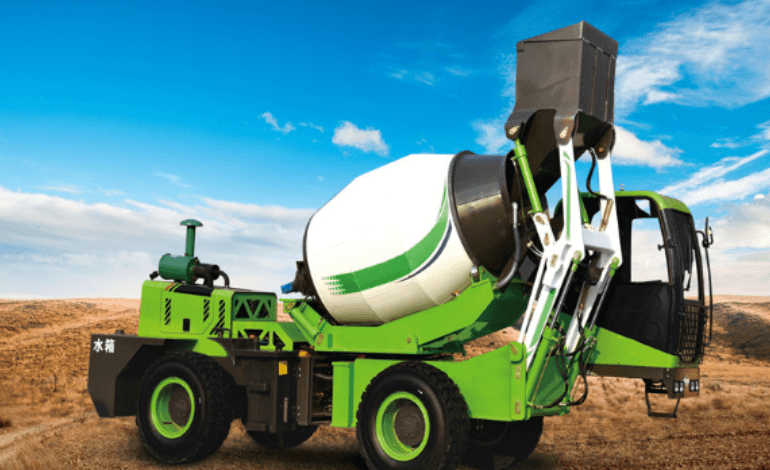
The self loading concrete mixer is an all-in-one construction vehicle designed for autonomous concrete production and delivery. Unlike traditional concrete solutions that require a separate batching plant, a loader, and a transit mixer, this mobile unit does it all—right on the site.
It includes:
- A front loader for scooping raw materials (sand, aggregates, cement)
- A rotating mixing drum for high-quality concrete mixing
- A water dosing system to ensure mix precision
- Mobility features (4WD, off-road tires) for tough terrains
From the moment raw materials are loaded to the final pour, everything is handled by a single machine, often operated by one person.
See also: Discovering the Charm of Life in Michigan
The Challenge with Traditional Concrete Delivery
Let’s take a step back and look at how concrete was traditionally handled:
- Central batching plant prepares the mix.
- Transit mixer transports the concrete.
- Labor crew unloads and pours it at the site.
This process is not only time-consuming but often inefficient due to traffic delays, weather impacts, inconsistent batching, or site inaccessibility.
Also, small or remote projects often don’t justify the cost of frequent deliveries or setting up a batching plant.
Use Cases: Where the self loading concrete mixer Shines
- Low-cost housing schemes
- Irrigation channel construction
- Bridge footings in difficult terrain
- Pavement repairs and maintenance
- Warehouses and agricultural sheds
- Emergency response (flood or earthquake zones)
Because the machine can be driven and operated in rugged environments, it can reach places where concrete trucks simply can’t go.
Economic Analysis: Is It Worth the Investment?
Let’s talk numbers. A self loading concrete mixer typically requires a higher upfront investment than renting transit mixers. However, long-term savings tell a different story.
Cost Breakdown Example (Per 100 Cubic Meters of Concrete):
| Factor | Traditional Method | self loading concrete mixer |
| Material cost | Same | Same |
| Labor | High (5–6 workers) | Low (1–2 operators) |
| Equipment rental | Loader + Mixer + Truck | Single unit |
| Transport delays | Common | None |
| Wastage | 5–10% | 1–2% |
| Downtime loss | Frequent | Minimal |
Within a few medium-sized projects, the machine usually pays for itself in savings and efficiency.
Key Specifications to Consider Before Purchase
If you’re considering acquiring a self loading concrete mixer, look into:
- Drum Capacity: Ranges from 1.2 to 6.5 cubic meters
- Engine Type: Diesel-powered with hydraulic support
- Weighing System: Look for load-cell-based digital scales
- Drum Rotation Angle: Machines offering 270° or 360° discharge provide better flexibility
- Water System: Should include a tank, pump, and digital control
- Brand Reputation: Popular models from Daswell, Ajax, Carmix, and Fiori offer strong after-sales support
Also ensure the machine is compliant with regional safety and emissions standards.
Operator Experience: A Day on the Job
Operators often describe the self loading concrete mixer as “the most efficient tool on site.” Here’s what a typical workday looks like:
- Morning Setup: Machine is inspected, fueled, and prepped.
- Loading Phase: Aggregates, sand, and cement are loaded via the bucket.
- Water Dosage: System inputs the required amount of water.
- Mixing Time: 5–7 minutes for uniform concrete.
- Driving to Pour Site: The machine is driven to the point of use, even on uneven terrain.
- Concrete Discharge: Drum rotates and pours the exact amount needed.
The cycle repeats as required throughout the day.
Environmental Benefits of Using self loading concrete mixer
The shift to self loading concrete mixers isn’t just about economics—it also supports sustainability:
- Reduced fuel consumption from minimized machine use
- Less concrete waste, since batching is done on-demand
- Precise water usage, avoiding over-watering and run-off
Safety and Training Tips
- Train operators thoroughly before first use
- Inspect hydraulic lines and brakes daily
- Keep the drum clean after every shift
- Use wheel chocks on slopes
- Avoid overloading materials
Most brands offer onboarding programs or digital manuals to help your team get started.
Future Trends
Technology in construction equipment is advancing fast, and the self loading concrete mixer is no exception. Upcoming trends include:
- Hybrid or electric models
- Remote diagnostics via IoT
- Batch tracking through cloud software
- Augmented reality-based training for operators
These developments will further reduce operating costs while improving performance and monitoring.
Conclusion
Whether you’re building homes in remote locations, paving roads, or responding to disaster recovery needs, this compact powerhouse delivers unmatched convenience and control.
For contractors aiming to maximize ROI, improve workflow, and reduce project timelines, investing in a self loading concrete mixer is no longer a luxury—it’s a competitive necessity.


