
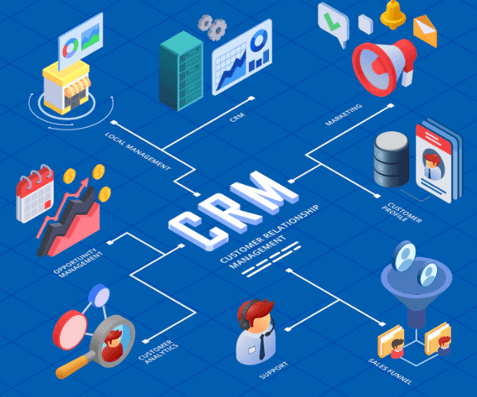
Your CRM will be good only based on the quality of data it contains. Nevertheless, most businesses face a common problem. It is because their CRM database is filled with duplicate, outdated, or invalid email addresses. This decay in data, apart from cluttering your system, can also undermine every decision you make, right from marketing campaign performance to sales forecasting.
To resolve this issue, CRM email validation integration can be the right choice. With this integration, you can automatically get email addresses verified as they enter your database. As a result, you can maintain accurate and clean data that drives better business outcomes.
Understand the Data Quality Crisis in CRMs
Studies show that CRM data decays at a rate of 2 to 3% per month. It means that a clean database in your CRM becomes 25 to 30% inaccurate within a year. invalid emails accumulate through different sources like fake signups, typos, manual data entry errors, disposable email addresses, and leads who have changed their email providers or jobs.
Let us consider that your CRM is filled with bad data. When this happens, its effects can be felt across your organization, like:
- Waste of time for sales teams as they follow invalid contacts.
- Marketing campaigns damage the sender reputation due to inflated bounce rates.
- Analytics becomes non-dependable, thereby making it tough to calculate your return on investment.
- Your forecasting and reporting lose credibility
- With unverified contact information, your compliance risk also increases.
The result overall is not simply wasted resources but also missed opportunities and lost revenue.
See also: Logitech z407 Manual
How Email Validation Integration Works?
CRM email validation integration works by associating email validation tools directly to your CRM platform. When a fresh contact is added to the CRM, which can happen through manual entry, data import, or through a form, the system automatically checks the email address in real-time. The validation process aims at checking syntax errors and typos when the email address is entered. Also, the validation checks whether the domain name associated with the email address actually exists. If the domain exists, it will check whether it is in a condition of receiving emails.
Further, it will check the deliverability of an email address and evaluate the risk factors like spam trap, role-based, or disposable email addresses. Also, it will check whether the email address already exists in your system.
It will flag risky or invalid email addresses, and they are either quarantined or rejected before they pollute your database. In turn, bad data is prevented from entering your CRM in the first place, rather than trying to clean the email list later.
Final Thoughts
In short, CRM email validation integration is not simply about cleaning data. It is about developing a foundation for growth. When your CRM has only high-quality and verified contacts, every process that follows will improve. Yes, marketing performs better, sales become more efficient, and your entire business makes better decisions.
In the present competitive business landscape, data quality is a competitive advantage. So, make it a priority with CRM email validation integration!