
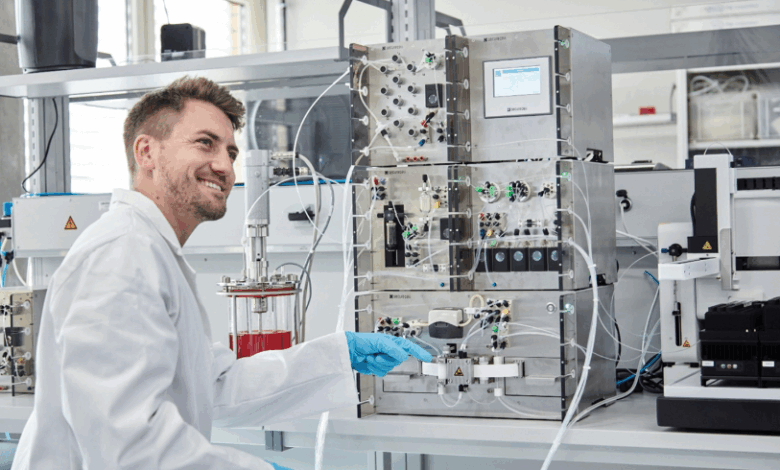
The remarkable advancements in biomedical research, drug discovery, and regenerative medicine have placed an unprecedented demand on large-scale cell culture. Moving from laboratory-bench quantities to industrial-level production presents a unique set of challenges and opportunities. The ability to efficiently and consistently scale up cell culture systems is paramount for generating sufficient quantities of cells, proteins, or viral vectors needed for clinical trials, therapeutic manufacturing, and extensive in vitro studies. This guest post delves into the critical considerations and strategies for optimizing cell culture scale-up, ensuring robust and reproducible outcomes for your ambitious research projects.
The Imperative of Scalability in Modern Research
The journey from initial hypothesis to viable therapeutic often requires vast quantities of biological material. Whether it’s producing monoclonal antibodies, engineering tissues, or developing viral gene therapies, the success hinges on the ability to generate cells or their products at scale without compromising quality or biological activity. In drug discovery, for instance, high-throughput screening demands consistent cell lines for countless assays. For regenerative medicine, hundreds of millions, if not billions, of cells might be needed for a single patient treatment. Efficient scale-up is not merely about increasing volume; it’s about maintaining cellular viability, function, and genetic stability across orders of magnitude.
Key Considerations for Successful Scale-Up
Successful cell culture scale-up requires a holistic approach, addressing factors from cell line selection to bioreactor design and process control.
1. Cell Line Selection and Characterization
The inherent characteristics of your cell line profoundly impact its scalability. Some cell lines are inherently more robust and adaptable to diverse culture conditions than others.
- Genetic Stability: Ensure your cell line maintains its genetic integrity and desired phenotype over multiple passages and increasing volumes. Regular genetic profiling (e.g., karyotyping, STR analysis) is crucial.
- Growth Kinetics: Understand the doubling time, maximum cell density, and nutrient requirements of your cells. This data informs bioreactor sizing and media optimization.
- Adherence vs. Suspension: Adherent cells, like the widely used Caco-2 intestinal epithelial cells for permeability studies, require surfaces for growth, making scale-up more complex than suspension cultures. Microcarrier technology or specialized multi-layered vessels become essential for adherent cells.
2. Media Optimization and Nutrient Management
Culture media is the lifeblood of your cells. As cultures grow in scale, nutrient depletion and waste product accumulation become significant concerns.
- Formulation Customization: Standard media formulations may not be optimal for large-scale production. Consider custom media development to reduce costs, eliminate animal-derived components, and enhance cell growth and productivity.
- Feed Strategies: Implementing fed-batch or perfusion strategies can significantly extend culture duration and increase volumetric productivity. This involves continuously or intermittently adding fresh media and/or removing spent media and waste products.
- Osmolality and pH Control: Maintaining optimal osmolality and pH ranges is critical. Large-scale bioreactors require precise control systems to prevent fluctuations that can stress cells and reduce viability.
3. Bioreactor Selection and Design
The choice of bioreactor is perhaps the most defining aspect of scale-up. It dictates the environment your cells experience.
- Stirred-Tank Bioreactors: Widely used for suspension cultures, these offer excellent mixing, gas exchange, and environmental control. Challenges include shear stress on sensitive cells.
- Wave Bioreactors: Ideal for shear-sensitive cells, these disposable bags rock gently to mix, providing a low-shear environment. They are excellent for initial scale-up to pilot stages.
- Hollow Fiber Bioreactors: Suitable for high-density, perfusion-based cultures, especially for secreting products. They offer a large surface area for cell attachment and nutrient exchange.
- Fixed-Bed/Packed-Bed Bioreactors: Excellent for adherent cells like Caco-2 cells, providing a large surface area on inert matrices and enabling high cell densities.
- Microcarrier Systems: For adherent cells in stirred tanks, microcarriers provide a vast surface area for attachment. Careful optimization of microcarrier type, concentration, and agitation speed is vital to prevent cell damage or detachment.
See also: How Virtual Therapy Is Changing Mental Health Care in 2025
4. Process Monitoring and Control
Robust monitoring and control systems are indispensable for maintaining optimal conditions and ensuring batch consistency.
- Real-time Sensors: Implement sensors for pH, dissolved oxygen (DO), temperature, and glucose/lactate levels. These provide continuous data, allowing for immediate adjustments.
- Automated Sampling: Automated sampling systems reduce manual intervention and potential contamination, providing timely data for process adjustments.
- Process Analytical Technology (PAT): Integrating PAT tools allows for real-time quality assurance and process understanding, moving towards a “quality by design” approach.
5. Contamination Prevention
The risk of contamination increases exponentially with scale. A robust contamination control strategy is non-negotiable.
- Sterile Technique: Adherence to strict aseptic techniques is paramount at every stage.
- Closed Systems: Utilizing closed bioreactor systems and sterile connectors minimizes exposure to the environment.
- Environmental Monitoring: Regular monitoring of cleanroom environments and personnel practices helps identify and mitigate contamination risks.
Case Study Snippet: Scaling Caco-2 Cultures for Drug Permeability Assays
Consider the challenge of scaling Caco-2 cell cultures. These cells, derived from human colorectal adenocarcinoma, form tight junctions and express efflux transporters, making them an excellent in vitro model for predicting oral drug absorption. While monolayer cultures in multi-well plates are standard for initial screens, large-scale drug permeability studies or co-culture experiments can demand billions of cells. Scaling Caco-2 from T-flasks to microcarrier-based stirred-tank bioreactors or packed-bed systems has demonstrated success. By optimizing microcarrier type (e.g., collagen-coated dextran beads), agitation speed to balance mixing with shear stress, and media perfusion rates, researchers have achieved cell densities far exceeding static cultures, yielding sufficient cellular material for high-throughput screens and specialized assays. This approach allows for consistent cell quality and function across batches, which is critical for reliable drug development data.
Conclusion
Optimizing cell culture scale-up is a multifaceted endeavor that demands careful planning, robust technology, and a deep understanding of cellular biology. By meticulously addressing cell line characteristics, media formulation, bioreactor design, process control, and contamination prevention, researchers can transition their projects from benchtop to industrial scale with confidence. The investment in these strategies not only ensures the efficient production of high-quality biological materials but also accelerates the pace of scientific discovery and the development of life-changing therapies. The future of biomedical research heavily relies on our ability to master the art and science of large-scale cell culture.